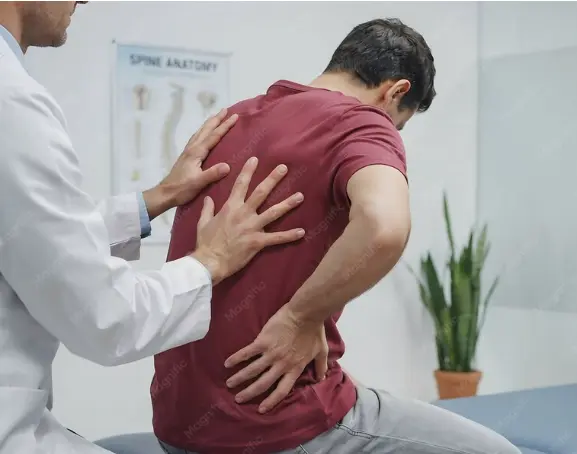
Best Back Pain Specialist in Goregaon
Back pain can impact many areas of your life — including whether you can sit comfortably at work, sleep well at night, or perform simple everyday activities such as bending down or picking up heavy items. If you're dealing with persistent pain, proper evaluation by a specialist can help identify the underlying cause. Dr. Rahul Modi provides assessment and treatment for back pain at Kapadia Multispeciality Hospital in Goregaon.
Identifying the Causes of Backache
Back pain can have several possible causes. The problem may develop due to muscle strain, ligament injury, or poor posture. Other conditions such as herniated discs, spinal stenosis, arthritis, or osteoporosis-related fractures can also contribute to back pain. Day-to-day factors such as prolonged sitting, incorrect lifting techniques, or unsuitable sleeping positions may further aggravate symptoms.
Back pain can generally be classified as acute when it develops suddenly, often following an injury, or chronic when symptoms persist for an extended period. Identifying the underlying cause is an important part of planning appropriate treatment.
Techniques Used by Dr. Rahul Modi in Diagnosing Patients
The diagnosis process begins with a detailed physical examination to assess movement, reflexes, muscle strength, and the location and nature of pain. Depending on the symptoms and clinical findings, imaging tests such as MRI, X-ray, or CT scans may be recommended to evaluate the bones, discs, and surrounding tissues. In selected cases involving possible nerve problems, neurophysiological testing such as EMG may also be considered.
Based on the evaluation, Dr. Modi develops a treatment plan according to the patient's condition rather than following a standard approach. Patients seeking back pain treatment in Goregaon can discuss their symptoms and suitable management options during consultation.
Dr. Modi holds MBBS and MS in Orthopaedics qualifications and has also completed DNB and MNAMS. He has undergone fellowship training in Sports Medicine, Arthroscopy, and Shoulder Surgery at Hospital Quirónsalud in Barcelona, Spain. His orthopaedic training and clinical experience enable him to evaluate different musculoskeletal conditions associated with back pain.
For many patients, treatment may initially focus on conservative measures such as physiotherapy, appropriate exercises, activity modification, and medicines when clinically indicated. This approach can help manage symptoms while addressing factors that may contribute to back pain.
Complete Treatment Options
Modern back pain management often emphasizes maintaining appropriate activity and rehabilitation rather than prolonged bed rest. Dr. Modi may recommend selected exercises designed to improve the strength and flexibility of the back and core muscles, along with other measures based on the patient's condition.
Medicines may be recommended when appropriate to help manage pain and inflammation. Surgery is generally considered for specific conditions or persistent symptoms when non-surgical treatment has not provided adequate improvement. Conditions such as significant nerve compression, certain herniated discs, or spinal stenosis may require surgical evaluation. The recommended procedure depends on the individual's diagnosis and clinical findings.
When to See a Doctor
If back pain continues despite rest or conventional treatment, medical evaluation can help determine the underlying cause. Symptoms such as leg weakness, numbness, unexplained weight loss, or other unusual changes should also be discussed with a healthcare professional.
Loss of bladder or bowel control, severe numbness, significant weakness, or fever accompanied by back pain can indicate a need for urgent medical assessment.
A Reliable Spine Expert You Can Count On in Goregaon
Patients consulting Dr. Rahul Modi can discuss their symptoms, diagnosis, and treatment options in detail. His approach focuses on clear communication and helping patients understand the condition and the available management options.
Book Your Appointment Today
If back pain is interfering with your daily activities, consider getting an appropriate evaluation rather than continuing to manage persistent symptoms on your own. Consult Dr. Rahul Modi for an assessment and a treatment plan based on your condition.
Dr. Modi sees patients from Goregaon and the surrounding western suburbs of Mumbai. Visit drrahulmodiortho.com to learn more and book an appointment.
FAQs
1. How do I find the right specialist for chronic back pain in Goregaon?
Dr. Rahul Modi, known as the best back pain specialist in Goregaon, takes a conservative-first approach, focusing on physiotherapy and lifestyle changes before considering surgery. His thorough diagnostic process — combining physical exams with imaging like MRI or CT — helps him build a treatment plan specific to each patient rather than a one-size-fits-all approach.
2. What's the difference between acute and chronic back pain?
Acute back pain usually shows up suddenly, often after an injury or strain, and tends to improve within a few weeks. Chronic back pain, on the other hand, persists for six months or longer and often points to an underlying issue, like a herniated disk or spinal stenosis, that needs proper evaluation.
3. What everyday habits tend to make back pain worse?
A few common culprits include sitting for long stretches without a break, lifting heavy objects with poor form, and sleeping on an unsupportive mattress. None of these usually cause back pain on their own, but they can aggravate an existing issue or slow down recovery.
4. When is imaging like an MRI or CT scan actually necessary for back pain?
Imaging isn't needed for every case — many instances of back pain are diagnosed through a physical exam alone. But when there's suspicion of a herniated disk, spinal stenosis, or nerve involvement, MRI, X-ray, or CT scans help confirm what's happening with the bones and soft tissue.
5. What is EMG testing, and why would a back pain doctor recommend it?
EMG (electromyography) is a nerve function test used when back pain seems to be affecting the nerves, such as causing numbness, tingling, or weakness down the leg. It helps pinpoint whether nerve compression is contributing to the pain, which can shape the treatment approach.
6. Does back pain always require surgery to get better?
No — most back pain responds well to physiotherapy, targeted exercises, and lifestyle adjustments. Dr. Modi reserves surgery for cases involving persistent symptoms or complications like nerve impingement, herniated disks, or spinal stenosis that haven't improved with conservative treatment.
7. What back pain symptoms should never be ignored?
Certain signs call for urgent medical attention — loss of bladder control, severe numbness, fever accompanied by back pain, or unexplained weight loss. Persistent pain that doesn't respond to rest or basic treatment, or comes with leg weakness, also warrants a proper evaluation rather than waiting it out.