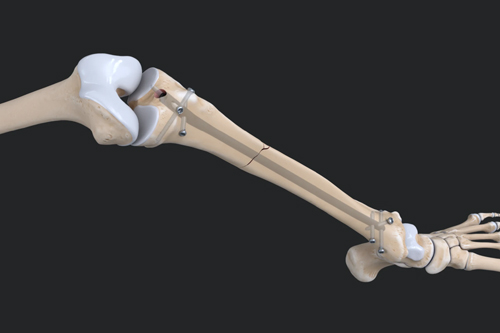
Orthopaedic trauma can involve fractures, joint injuries, ligament damage, and complex injuries following accidents, falls, sports incidents, or other trauma. Prompt assessment and appropriate treatment are important for restoring alignment, stability, and movement.
Dr. Rahul Modi has extensive exposure to orthopaedic trauma management, including more than 500 orthopaedic trauma surgeries, along with experience in fracture care, arthroscopy, joint injuries, and complex orthopaedic conditions.
Trauma surgery focuses on the assessment and treatment of musculoskeletal injuries caused by accidents, falls, sports injuries, and other physical trauma. Depending on the injury, treatment may involve non-surgical care, fracture stabilization, or surgery to restore the position and function of the affected bone or joint.
The appropriate treatment is determined after evaluating the injury, imaging findings, overall health, and functional requirements of the patient.
Orthopaedic trauma can affect different parts of the musculoskeletal system. Treatment may be required for:
- Fractures
- Complex fractures
- Joint injuries
- Ligament injuries
- Sports-related trauma
- Multiple orthopaedic injuries
- Dislocations
- Injuries requiring surgical stabilization
After significant trauma, symptoms that may require orthopaedic evaluation include:
- Severe or persistent pain
- Swelling and bruising
- Difficulty moving a limb or joint
- Difficulty bearing weight
- Visible deformity
- Joint instability
- Reduced strength or function
- Pain following an accident or fall
Orthopaedic injuries may occur because of sudden or high-impact forces, including:
- Road traffic accidents
- Falls
- Sports injuries
- Workplace injuries
- Direct impact
- Twisting injuries
- High-energy trauma
- Accidental injuries
A detailed assessment helps determine the extent of an orthopaedic injury and whether surgery is required. Evaluation may include a physical examination and appropriate imaging, such as X-rays or advanced scans, depending on the injury.
Treatment decisions are based on the location and severity of the injury, bone or joint involvement, soft-tissue condition, overall health, and expected functional requirements.
Treatment is tailored to the injury. Depending on the condition, care may involve non-surgical management or operative treatment to restore stability and alignment.
- Fracture reduction and stabilization
- Casts, braces, or other support
- Closed fracture management
- Surgical fracture fixation
- Joint injury management
- Ligament reconstruction when indicated
- Arthroscopic treatment when appropriate
- Post-operative rehabilitation
Surgery may be recommended when a fracture is displaced or unstable, when a joint is significantly injured, or when the injury cannot be appropriately managed with non-surgical treatment.
Dr. Modi has performed 500+ orthopaedic trauma surgeries, giving him substantial operative exposure in the management of traumatic orthopaedic injuries.
Some traumatic injuries involve more than one structure or require careful coordination between fracture treatment, joint care, ligament management, and rehabilitation. A structured treatment plan helps address the injury while keeping long-term movement and function in focus.
Recovery after trauma depends on the type and severity of the injury, treatment performed, overall health, and individual healing. Follow-up assessment helps monitor healing and progress.
Physiotherapy and rehabilitation may be recommended to restore strength, joint movement, balance, stability, and function once it is safe to begin rehabilitation.
Significant injuries should be assessed promptly to understand the extent of damage and determine the appropriate treatment. Early specialist evaluation can help guide decisions about fracture alignment, joint stability, surgical treatment, and rehabilitation.
Seek an orthopaedic evaluation after a significant injury, especially if you have:
- Severe or increasing pain
- Significant swelling or bruising
- Difficulty bearing weight
- Inability to move the injured area
- Visible deformity
- Suspected fracture or dislocation
- Joint instability after injury
- Persistent symptoms after an accident
What is orthopaedic trauma surgery?
Orthopaedic trauma surgery deals with injuries involving bones, joints, ligaments, and
other musculoskeletal structures following accidents, falls, sports injuries, or other trauma.
Do all traumatic injuries require surgery?
No. Treatment depends on the type and severity of the injury. Some injuries can be managed
without surgery, while unstable fractures, certain joint injuries, and complex trauma may
require operative treatment.
When should I see an orthopaedic surgeon after an accident?
An evaluation is advisable when there is significant pain, swelling, deformity, difficulty
moving or bearing weight, or concern about a fracture, dislocation, or joint injury.
How long does recovery after trauma surgery take?
Recovery varies depending on the injury, surgery, bone healing, overall health, and
rehabilitation. Your recovery plan will be tailored to your condition.
Will I need physiotherapy after trauma surgery?
Rehabilitation is often an important part of recovery. Physiotherapy may help restore
movement, strength, stability, and function when appropriate.
After an accident or significant injury, timely orthopaedic assessment can help you understand the extent of the injury and the treatment options available. Consult Dr. Rahul Modi for comprehensive trauma and fracture care.