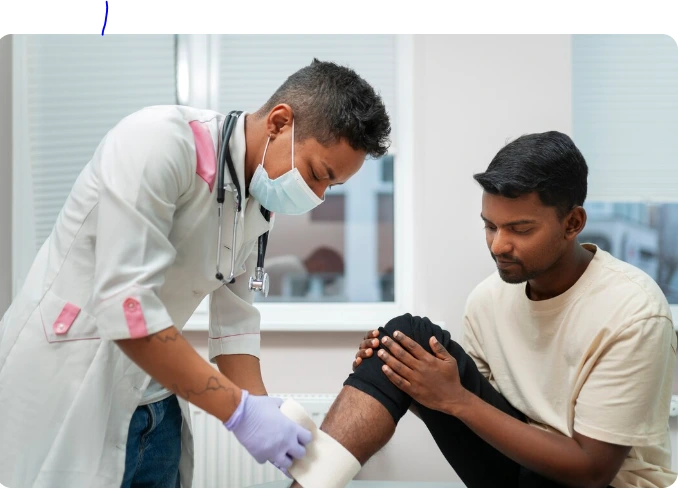
Best Fracture Specialist in Goregaon
Dr. Rahul Modi provides evaluation and treatment for a wide range of bone and joint injuries, including fractures, at Kapadia Multispeciality Hospital in Goregaon. With his orthopaedic and trauma training, he assesses the type and severity of each fracture and develops a treatment plan based on the patient's individual condition.
What are Fractures and Their Varieties?
Fractures can vary considerably in their severity and complexity. A simple closed fracture does not break through the skin, while an open fracture involves a wound that communicates with the fracture and requires prompt medical attention because of the increased risk of infection.
Other types include hairline or stress fractures, which can develop through repetitive loading, greenstick fractures that are more commonly seen in children, and comminuted fractures in which the bone breaks into multiple fragments. Fractures involving a joint require careful assessment because improper healing can affect joint movement and function.
Patients with bone-weakening conditions such as osteoporosis may sustain fractures following relatively minor trauma and may require additional evaluation and management.
Detection of the Symptoms
Common signs of a fracture may include significant pain, swelling, bruising or discoloration, deformity, and difficulty or inability to use the affected limb. Some patients may also experience tenderness or difficulty bearing weight.
A grating or grinding sensation around the injured area, significant deformity, an open wound, or severe pain following an injury requires prompt medical evaluation. Avoid attempting to straighten or reposition a suspected fracture yourself.
Reasons to Select Dr. Rahul Modi, the Best Bone Fracture Specialist in Goregaon
Dr. Modi holds qualifications including MBBS and MS in Orthopaedics, with the MS qualification earned with gold medal distinction. He also holds DNB and MNAMS qualifications and has undergone fellowship training in Sports Medicine, Arthroscopy, and Shoulder Surgery at Hospital Quirónsalud in Barcelona.
Fractures can range from simple cracks to complex injuries involving multiple bone fragments or nearby joints. Dr. Modi evaluates the fracture pattern, alignment, associated injuries, and other patient-specific factors when determining the appropriate treatment approach.
Patients seeking a bone fracture specialist in Goregaon can consult Dr. Rahul Modi for assessment and management of different types of fractures.
Overall Treatment Methods
Some fractures can be treated with immobilization using casts, splints, or braces when the bones are appropriately aligned and the injury is suitable for non-surgical management. More complex fractures, including those with significant displacement, multiple fragments, or joint involvement, may require surgery.
Fracture surgery may involve realigning the bones and stabilizing them using fixation devices such as plates, screws, rods, or other implants. The appropriate technique depends on the location and characteristics of the fracture.
Healing time varies depending on the affected bone, fracture type, age, overall health, nutrition, and other factors such as smoking. Many fractures require several weeks to heal, although more complex injuries may take longer. Follow-up assessments and rehabilitation can help monitor healing and support the return of strength and mobility.
Modern Solutions for Healing Issues
In selected cases of delayed healing or non-union, additional treatment may be considered after evaluating the underlying cause. Depending on the fracture and clinical situation, options may include revision fixation, bone grafting, or other treatments designed to support bone healing.
Advanced treatments are considered on a case-by-case basis, and their suitability depends on factors such as the type of fracture, healing status, overall health, and previous treatment.
Patients Rely on Dr. Modi
Patients from Goregaon and nearby areas can discuss their fracture diagnosis, treatment options, and expected recovery with Dr. Modi. His approach focuses on clear communication and individualized treatment planning according to the nature of the injury.
For patients looking for a fracture specialist in Goregaon, Dr. Rahul Modi provides orthopaedic and trauma care at Kapadia Multispeciality Hospital.
Make Your Appointment Now
If you or someone close to you has suffered a fracture, timely medical evaluation is important to determine the extent of the injury and appropriate treatment. Dr. Rahul Modi provides comprehensive assessment and fracture management based on the patient's specific condition.
Patients from Goregaon and surrounding areas can consult Dr. Modi at Kapadia Multispeciality Hospital. Visit drrahulmodiortho.com to learn more and book a consultation.
FAQs
1. What should you know before choosing a fracture specialist in Goregaon?
When it comes to fracture care, alignment accuracy in the first few days often matters more for long-term recovery than people realize — something Dr. Rahul Modi, the best fracture specialist in Goregaon, pays close attention to across every type of fracture, from simple cracks to complex breaks.
2. What's the difference between a hairline fracture and a greenstick fracture?
A hairline fracture is a thin, partial crack usually caused by repetitive stress, commonly seen in athletes. A greenstick fracture, on the other hand, is mostly seen in children, where the bone bends and cracks on one side without breaking all the way through, thanks to how flexible young bones are.
3. Why are fractures near a joint treated differently from fractures in the middle of a bone?
Fractures involving a joint carry a higher risk of long-term stiffness or arthritis if they aren't managed carefully, since joint surfaces need precise alignment to keep functioning smoothly. Dr. Modi pays particular attention to these cases to reduce the chances of lasting joint problems.
4. Why do people with osteoporosis need to be extra careful about fractures?
Osteoporosis weakens bone density, which means even a minor fall or impact that wouldn't normally cause harm can result in a fracture. These fractures often need urgent attention and closer monitoring, since weakened bone can also affect how well the injury heals.
5. What are the warning signs that a bone might be fractured rather than just bruised?
Severe pain, swelling, visible deformity, or being unable to use the injured area are strong indicators of a possible fracture. A grinding or grating sensation, or nausea in more severe cases, are also signs that warrant prompt medical evaluation rather than waiting it out.
6. How long does it typically take for a fracture to heal?
Most fractures heal in around 6 to 8 weeks, though the exact timeline depends on which bone is affected, the patient's age, and lifestyle factors like smoking, which can slow healing. Dr. Modi follows up throughout this period to make sure healing is progressing as expected.
7. What happens if a fracture doesn't heal properly on its own?
In cases of delayed healing or non-union, Dr. Modi may recommend advanced options like bone grafting or ultrasound stimulation to support the bone's recovery. For more complex regeneration issues, newer approaches like stem cell therapy may also be considered.