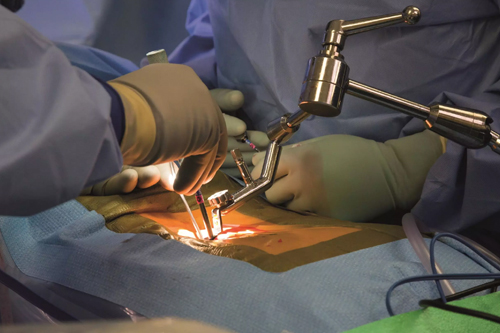
Spine conditions can cause back or neck pain, stiffness, weakness, numbness, and difficulty with everyday movement. A detailed assessment helps identify the cause of symptoms and determine whether non-surgical treatment or surgery is appropriate.
Dr. Rahul Modi's orthopaedic training included exposure to the management of spine disorders as part of comprehensive orthopaedic care. Treatment is planned according to the patient's symptoms, examination, imaging, and functional needs.
Spine surgery includes procedures used to treat selected conditions affecting the bones, discs, nerves, and other structures of the spine. Surgery is considered only when it is clinically appropriate and when symptoms or structural problems require operative treatment.
Many spinal conditions can initially be managed without surgery. A thorough evaluation helps determine the most suitable treatment for each patient.
Spinal problems can have different causes and may affect the neck, back, or lower spine. Common concerns requiring orthopaedic evaluation include:
- Persistent back pain
- Neck pain
- Spinal stiffness
- Spine-related movement problems
- Nerve-related symptoms
- Spine conditions following trauma
- Spinal alignment problems
- Other orthopaedic spine disorders
Spine problems can present differently depending on the affected area and underlying condition. Symptoms may include:
- Persistent back pain
- Neck pain or stiffness
- Pain spreading into an arm or leg
- Reduced movement
- Numbness or tingling
- Weakness
- Difficulty with daily activities
- Symptoms following an injury
Spine symptoms may develop gradually or follow an injury. Possible contributing factors include:
- Age-related changes
- Previous spinal injury
- Degenerative changes
- Repetitive physical strain
- Poor movement or posture habits
- Trauma
- Spinal alignment problems
- Other underlying spinal conditions
A spine evaluation begins with a detailed discussion of symptoms and medical history, followed by a physical examination. Depending on the presentation, imaging such as X-rays, MRI, or other investigations may be recommended.
The aim is to identify the source of symptoms and understand whether the problem can be managed conservatively or requires specialist surgical consideration.
Surgery is not required for every spine condition. Depending on the diagnosis, treatment may begin with conservative measures such as:
- Activity modification
- Physiotherapy and rehabilitation
- Strengthening and mobility exercises
- Pain management
- Posture and movement guidance
- Lifestyle modifications
- Regular clinical follow-up
- Further specialist evaluation when required
Spine surgery may be considered when a structural spinal problem is causing significant symptoms or functional limitations and appropriate non-surgical treatment has not provided sufficient improvement. The decision is made after a detailed clinical and imaging assessment.
The exact procedure depends on the spinal condition, the area involved, the severity of the problem, and the patient's individual requirements.
Every spine condition is different. Before recommending surgery, the clinical findings and imaging are reviewed together to understand the problem and determine whether an operative approach is appropriate.
Treatment planning takes into account symptoms, functional limitations, overall health, previous treatment, and the expected goals of surgery and rehabilitation.
Recovery after spine treatment varies depending on the condition and treatment performed. Rehabilitation may help improve movement, strength, flexibility, and confidence with everyday activities.
Your activity restrictions and rehabilitation plan will depend on the specific treatment, healing progress, and individual recovery.
Consider a spine evaluation if back or neck symptoms are persistent, worsening, or affecting your everyday activities.
- Persistent back or neck pain
- Pain affecting daily activities
- Recurrent symptoms
- Reduced movement
- Numbness or tingling
- Weakness
- Symptoms after an injury
- Difficulty with normal activities
Does every back or neck problem require surgery?
No. Many spine conditions can be managed with non-surgical treatment. Surgery is considered
only when it is clinically appropriate after a detailed assessment.
When should I see a spine specialist?
Consider an evaluation when back or neck pain persists, keeps returning, affects daily
activities, or is associated with symptoms such as numbness, tingling, or weakness.
What tests may be needed for spine problems?
Depending on your symptoms and examination, your doctor may recommend X-rays, MRI, or other
investigations to understand the condition.
How long does recovery after spine surgery take?
Recovery varies according to the condition, procedure, overall health, and rehabilitation.
Your recovery plan will be tailored to your individual needs.
Will physiotherapy be required?
Rehabilitation may be recommended to restore movement, strength, and function after treatment.
The need and timing depend on your specific condition and procedure.
Persistent back or neck pain should not be ignored. Consult Dr. Rahul Modi for a detailed orthopaedic evaluation and personalized guidance for your spine condition.