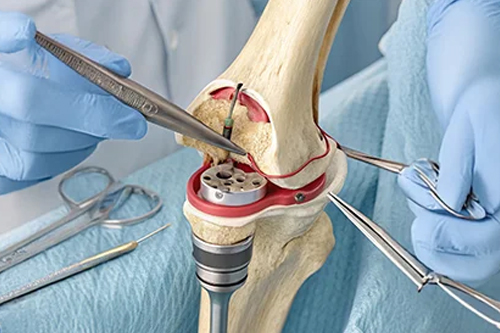
Knee replacement is a surgical treatment for severe knee joint damage that causes persistent pain, stiffness, and difficulty with everyday movement. The damaged joint surfaces are replaced with artificial components to help restore function and improve mobility.
Dr. Rahul Modi provides comprehensive orthopaedic care for knee conditions and joint replacement, with a focus on accurate assessment, appropriate treatment planning, and rehabilitation tailored to the individual patient.
Knee replacement, also known as knee arthroplasty, involves removing damaged portions of the knee joint and replacing them with artificial components. The aim is to reduce pain, improve joint function, and help the patient return to comfortable daily movement.
The decision to undergo knee replacement is based on the severity of joint damage, symptoms, functional limitations, imaging findings, overall health, and response to non-surgical treatment.
Knee replacement may be considered when significant joint damage is causing persistent symptoms and affecting everyday activities.
- Advanced knee osteoarthritis
- Persistent or severe knee pain
- Significant joint damage
- Increasing knee stiffness
- Difficulty walking or standing
- Difficulty using stairs
- Reduced knee movement
- Limited relief from non-surgical care
Advanced knee joint problems can gradually interfere with mobility and quality of life. Common symptoms include:
- Persistent knee pain
- Pain while walking or standing
- Knee stiffness
- Swelling or tenderness
- Difficulty climbing stairs
- Reduced range of motion
- Difficulty with daily activities
- Reduced ability to stay active
Knee damage can develop gradually or result from previous injury. Common contributing factors include:
- Osteoarthritis
- Age-related joint degeneration
- Previous knee injuries
- Repeated stress on the joint
- Previous ligament or cartilage injury
- Joint deformity or altered alignment
- Chronic joint problems
- Advanced joint wear
A knee replacement consultation begins with a detailed assessment of your symptoms, mobility, medical history, and knee function. Appropriate imaging helps assess the extent of joint damage and alignment.
Your treatment options are discussed based on your condition, lifestyle, activity level, and response to previous treatments. Knee replacement is considered when it is clinically appropriate.
During knee replacement, damaged joint surfaces are removed and replaced with artificial components designed to restore the function of the knee. The exact surgical approach and implant selection depend on the patient's individual condition.
- Detailed pre-operative assessment
- Patient-specific surgical planning
- Removal of damaged joint surfaces
- Implant positioning and fixation
- Assessment of knee alignment
- Intra-operative stability assessment
- Post-operative pain management
- Guided rehabilitation
Robotic-assisted knee replacement uses advanced technology to support surgical planning and precision during selected knee replacement procedures. The technology helps the surgeon assess the patient's individual knee anatomy and plan implant positioning and alignment.
The surgeon remains in control of the procedure throughout. Whether robotic assistance is appropriate depends on the patient's condition, treatment requirements, and clinical assessment.
The goals of knee replacement are to reduce pain and improve mobility and knee function. Depending on the patient's condition and recovery, potential benefits may include:
- Relief from severe joint pain
- Improved knee movement
- Better ability to walk
- Improved ability to perform daily activities
- Improved knee stability
- Support for a more active lifestyle
- Reduced limitations caused by joint damage
- Improved overall quality of life
Recovery varies from patient to patient and depends on overall health, knee condition, surgical findings, and rehabilitation progress. Early guided movement and physiotherapy are important parts of recovery after knee replacement.
Rehabilitation focuses on restoring knee movement, strength, balance, walking ability, and confidence with everyday activities. Your recovery plan will be adjusted according to your progress.
An orthopaedic evaluation may be appropriate when knee symptoms continue to interfere with everyday life despite appropriate non-surgical treatment.
- Persistent or severe knee pain
- Pain affecting sleep or daily activities
- Difficulty walking
- Increasing knee stiffness
- Difficulty climbing stairs
- Reduced knee movement
- Significant joint damage
- Limited improvement with non-surgical care
When is knee replacement recommended?
Knee replacement may be considered when severe joint damage causes persistent pain and
difficulty with daily activities, particularly when appropriate non-surgical treatments
no longer provide sufficient relief.
Is knee replacement suitable for everyone with knee pain?
No. Knee replacement is generally considered for significant joint damage. Your orthopaedic
specialist will assess your symptoms, examination findings, imaging, and previous treatment
before recommending surgery.
What is robotic-assisted knee replacement?
It is a knee replacement procedure supported by advanced robotic technology for surgical
planning and precision. The surgeon performs and controls the operation throughout.
How long does recovery take after knee replacement?
Recovery varies between patients. Your overall health, knee condition, surgery, and
rehabilitation program all influence the recovery process.
Will I need physiotherapy after knee replacement?
Physiotherapy and rehabilitation are important parts of recovery for most patients,
helping restore movement, strength, stability, and walking ability.
If knee pain or stiffness is limiting your everyday activities, consult Dr. Rahul Modi for a detailed assessment and personalized advice on the most appropriate treatment for your knee condition.