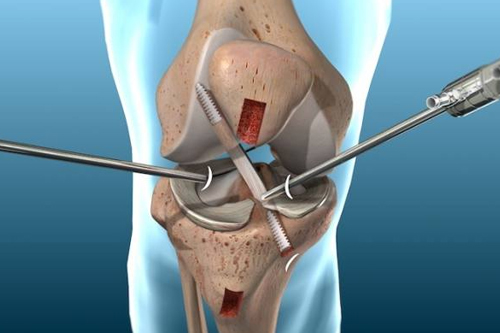
Arthroscopy is a minimally invasive joint procedure that allows an orthopaedic surgeon to examine and treat problems inside a joint through small incisions. It is commonly used for selected sports injuries and conditions affecting the knee, shoulder, and other joints.
Dr. Rahul Modi has undergone specialized training in arthroscopy and has clinical experience in knee, shoulder, and ankle arthroscopic procedures, including ligament reconstruction, meniscus repair, cartilage procedures, and treatment of shoulder instability and rotator cuff conditions.
Arthroscopy is a keyhole surgical technique in which a small camera is introduced into a joint through a small incision. The camera provides a clear view of the joint structures, helping the surgeon identify the problem and perform appropriate treatment through small access points.
Depending on the condition, arthroscopy may be used for diagnosis, treatment, or both. The procedure is selected after a detailed clinical evaluation and review of appropriate imaging.
Arthroscopy can be used for selected conditions affecting several joints. Dr. Modi's documented arthroscopic experience includes:
- Knee arthroscopy
- Shoulder arthroscopy
- Ankle arthroscopy
- Hip arthroscopy assistance
- Wrist arthroscopy assistance
- Elbow arthroscopy assistance
- Other selected joint conditions
- Sports-related joint injuries
Arthroscopy may be recommended for selected joint problems when appropriate. These may include:
- ACL injuries
- PCL injuries
- Meniscus injuries
- Multiple ligament injuries
- Shoulder instability
- Labral injuries
- Rotator cuff tears
- Cartilage injuries
Persistent joint symptoms can interfere with sports, work, and everyday activities. An orthopaedic evaluation may be appropriate if you experience:
- Persistent joint pain
- Recurrent swelling
- Joint stiffness
- Reduced range of movement
- Joint instability or giving way
- Locking or catching of the joint
- Difficulty during sports or activity
- Symptoms after a joint injury
A detailed assessment helps determine whether arthroscopy is appropriate for your condition. Your evaluation may include a clinical examination, review of your symptoms and previous treatment, and imaging such as X-rays or MRI when required.
The treatment approach depends on the injured structure, severity of the condition, activity level, and individual recovery goals.
Depending on the joint and condition, arthroscopy may be used to perform a range of minimally invasive procedures.
- ACL reconstruction
- PCL reconstruction
- Meniscus repair
- Cartilage procedures
- Multiligament reconstruction
- Shoulder labral procedures
- Treatment of recurrent shoulder instability
- Rotator cuff procedures
- Ankle arthroscopy
- Selected joint-preserving procedures
When arthroscopy is appropriate for a particular condition, its minimally invasive nature may offer advantages compared with conventional open procedures.
- Smaller surgical incisions
- Less disruption to surrounding tissues
- Direct visualization of the joint
- Targeted treatment of joint problems
- Support for earlier movement when appropriate
- Structured rehabilitation
- Focus on restoring joint function
- Individualized post-operative care
Dr. Rahul Modi has undergone dedicated arthroscopy training under experienced orthopaedic surgeons and has been exposed to the complete process of arthroscopic care, including investigation, diagnosis, pre-operative planning, risk assessment, surgical procedures, and post-operative rehabilitation.
His clinical experience includes knee arthroscopy involving ligament reconstruction, meniscus repair, cartilage preservation procedures, multiligament reconstruction and osteotomy, along with shoulder arthroscopy for labral injuries, recurrent dislocations, SLAP tears, multidirectional instability, and rotator cuff tears.
Recovery depends on the joint treated, the procedure performed, the severity of the condition, and your overall health. Some patients can return to routine activities relatively early, while ligament reconstruction and other major procedures require a longer rehabilitation period.
Physiotherapy and guided rehabilitation may be an important part of recovery, helping restore movement, strength, stability, and function before returning to sports or demanding activities.
Arthroscopy is not required for every joint problem. It may be considered after an orthopaedic assessment when symptoms and investigations indicate a condition that may benefit from arthroscopic treatment.
- Persistent joint pain
- Recurrent swelling or instability
- Suspected ligament injury
- Meniscus or cartilage problems
- Recurrent shoulder dislocation
- Rotator cuff problems
- Joint locking or catching
- Sports injury affecting activity
What is arthroscopy?
Arthroscopy is a minimally invasive procedure in which a small camera is used to view the
inside of a joint and, when required, perform treatment through small incisions.
Is arthroscopy suitable for every joint problem?
No. Arthroscopy is recommended only when it is appropriate for the specific condition.
Your orthopaedic specialist will assess your symptoms, examination findings, and imaging
before recommending treatment.
Is arthroscopy a major surgery?
Arthroscopy is minimally invasive, but the complexity of the procedure varies. Procedures
such as ligament reconstruction may require a longer recovery than simpler arthroscopic
treatments.
How long does recovery after arthroscopy take?
Recovery varies according to the joint and procedure. Your rehabilitation plan and return
to activity will depend on healing and functional progress.
Can I return to sports after arthroscopy?
Many patients can return to sports after appropriate treatment and rehabilitation. The
timing depends on the injury, procedure, healing, strength, stability, and sport-specific
requirements.
If joint pain, instability, or a sports injury is affecting your movement, consult Dr. Rahul Modi for a detailed evaluation and to understand whether arthroscopy may be appropriate for your condition.