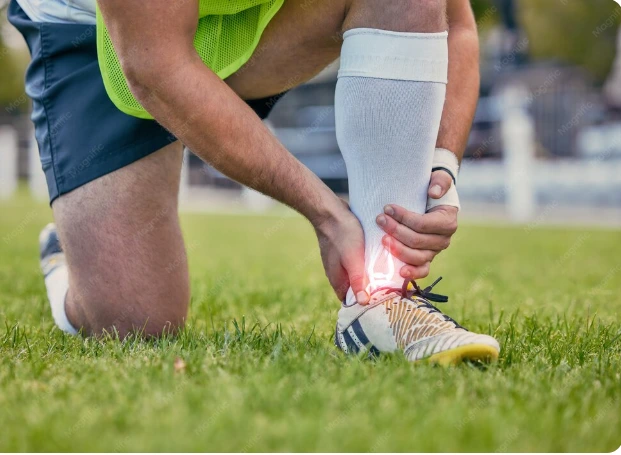
Best Sports Injury Specialist in Goregaon
A twisted knee on the football pitch, a pulled hamstring during a morning run, or a shoulder that hurts after every game of cricket — sports injuries are common among athletes and weekend players alike. Dr. Rahul Modi provides evaluation and treatment for sports-related injuries at Kapadia Multispeciality Hospital, serving patients from Goregaon and the surrounding suburbs as a sports injury specialist in Goregaon.
Common Sports Injuries Dr. Modi Treats
Sports injuries may involve ligaments, muscles, tendons, cartilage, or bones. Dr. Modi evaluates conditions such as ACL and other knee ligament injuries, ankle sprains, hamstring strains, Achilles tendon problems, shin splints, rotator cuff injuries, and fractures. Many of these injuries result from sudden twists or collisions, while others build up gradually through overuse, inadequate warm-up, or a rapid increase in training.
Because different injuries can feel alike in the early days, a proper assessment matters. Treating the wrong problem, or returning to sport too early, can prolong recovery.
ACL Tear or Sprain? Knowing the Difference
Knee injuries are among the most common reasons athletes seek care. An ACL tear is often accompanied by a popping sensation at the moment of injury, followed by swelling and a feeling that the knee is unstable or may give way. A sprain may cause pain and swelling as well, but the knee usually feels more stable.
Since the symptoms overlap, the injury cannot be reliably identified by symptoms alone. Dr. Modi uses a clinical examination and, when required, an MRI scan to confirm what is affected before recommending treatment.
Sports Medicine Training You Can Trust
Dr. Modi holds an MBBS and MS in Orthopaedics with gold medal distinction, along with DNB and MNAMS qualifications. He completed a fellowship in Sports Medicine, Arthroscopy, and Shoulder Surgery at Hospital Quirónsalud in Barcelona, Spain, and holds a FIFA Diploma in Football Medicine.
This background allows him to look beyond the injury itself, at how the body moves and performs under activity, so that treatment aims at returning active patients to their sport rather than only relieving pain. You can read more about Dr. Modi on his profile page.
Diagnosis and Treatment
Evaluation begins with a detailed history of how the injury happened and a physical examination. X-rays or MRI scans may be recommended depending on the findings. Treatment depends on the type and severity of the injury.
Many injuries respond to physiotherapy, activity modification, strengthening exercises, or bracing. When a ligament or tendon injury is significant, arthroscopic or reconstructive sports injury surgery may be discussed after a thorough evaluation, along with the expected rehabilitation.
Recovery and Returning to Sport
Recovery time varies widely. A mild sprain may settle within a couple of weeks, while a ligament tear or post-surgical recovery can take months. Rehabilitation is planned around the specific injury, so that strength and stability return before full activity resumes.
Injuries such as hamstring strains and shin splints tend to recur when athletes return too soon or skip strengthening. Addressing the underlying cause, whether it is training load, running form, or footwear, helps reduce that risk.
What to Do Right After an Injury
For minor injuries, Rest, Ice, Compression, and Elevation (RICE) can help manage symptoms in the early stage. Ice should not be applied directly to the skin, and activity should resume gradually rather than through significant pain.
Seek prompt evaluation if there is severe swelling, visible deformity, a popping or crunching sensation at the time of injury, inability to bear weight, or a joint that feels unstable.
Book Your Consultation
If a sports injury is not improving as expected or is limiting your movement, a timely evaluation can identify the underlying problem and guide the right treatment. Consult Dr. Rahul Modi, an experienced sports injury doctor in Goregaon, for an assessment based on your injury, activity level, and rehabilitation needs.
Visit drrahulmodiortho.com to learn more and book your appointment.
FAQs
1. Where can I find the best sports injury specialist in Goregaon?
Dr. Rahul Modi, the best sports injury specialist in Goregaon, consults at Kapadia Multispeciality Hospital in the western suburbs of Mumbai. With specialized training in sports medicine from Barcelona and a FIFA Diploma in Football Medicine, he diagnoses and treats injuries ranging from ligament tears to overuse conditions.
2. How long does it actually take to recover from a sports injury?
It really depends on what you've injured and how bad it is. A mild sprain might bother you for a couple of weeks, but something like a ligament tear or post-surgery recovery can stretch into months. Dr. Modi builds a rehab plan around your specific injury so you're not rushing back and risking a setback.
3. Do I need a sports injury specialist, or will a regular orthopedic surgeon do?
Both can help, but a sports injury specialist digs deeper into things like movement patterns and how your body performs under activity — not just the injury itself. Dr. Modi's background in sports medicine means he's trained specifically to get active patients back to their sport, not just pain-free.
4. My knee hurts — how do I know if it's an ACL tear or just a sprain?
A classic sign of an ACL injury is that "pop" you feel the moment it happens, followed by swelling and your knee feeling unstable or wobbly. But honestly, a lot of knee injuries feel similar at first, which is why Dr. Modi relies on a proper exam and, if needed, an MRI to figure out exactly what's going on.
5. Why do I keep getting shin splints when I run?
Shin splints usually show up when you've ramped up your running too fast, or your body's still adjusting to repetitive impact. Rest and easing off the intensity help, but Dr. Modi also looks at what's actually causing the stress in the first place — like your running form or footwear — so it doesn't just keep coming back.
6. I hurt my hamstring — will it ever fully heal, or is it just going to keep happening?
Hamstring injuries can heal completely, but they're notorious for coming back if you push too soon. The key is giving it proper time and doing the strengthening work Dr. Modi recommends before jumping back into sport — that's usually what makes the difference between a one-time injury and a recurring one.
7. What should I do right after getting hurt, before I can see a doctor?
Start with the basics — rest, ice, compression, and keeping it elevated. But if the pain isn't easing up, something looks visibly off, or you can't put weight on it, don't wait it out. That's when it's time to get it checked by someone like Dr. Modi rather than hoping it sorts itself out.