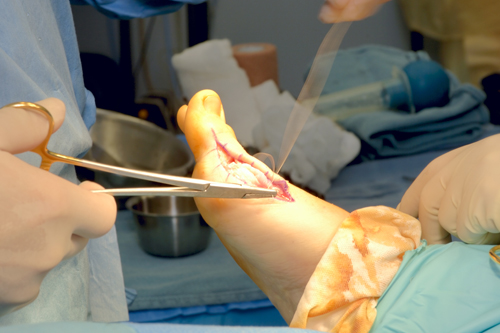
Foot and ankle problems can affect walking, balance, stability, and everyday activities. Injuries, joint conditions, deformities, and sports-related problems may cause pain or restrict movement.
Dr. Rahul Modi's orthopaedic training includes exposure to foot and ankle disorders, ankle arthroscopy, trauma, sports injuries, and comprehensive management of musculoskeletal conditions.
Foot and ankle surgery includes procedures used to treat selected injuries, joint conditions, deformities, and other problems affecting the foot or ankle. Treatment may be non-surgical or surgical depending on the diagnosis, severity, and impact on function.
A detailed orthopaedic assessment helps identify the source of the problem and determine the most appropriate treatment for your condition.
Foot and ankle problems can occur after an injury or develop gradually. Conditions that may require orthopaedic evaluation include:
- Ankle injuries
- Sports-related injuries
- Ankle ligament injuries
- Joint injuries
- Ankle cartilage problems
- Fractures and trauma
- Joint stiffness
- Other foot and ankle disorders
Foot and ankle conditions may affect the way you walk and put weight on the affected limb. Common symptoms include:
- Foot or ankle pain
- Swelling
- Stiffness
- Reduced ankle movement
- Difficulty walking
- Difficulty bearing weight
- Instability while walking
- Pain during sports or physical activity
Foot and ankle problems can result from sudden injury, repeated stress, or underlying joint and musculoskeletal conditions.
- Sports injuries
- Falls and accidents
- Ankle sprains
- Direct trauma
- Repetitive stress
- Previous injury
- Joint degeneration
- Other orthopaedic conditions
A detailed assessment helps identify the source and severity of foot or ankle symptoms. Evaluation may include a physical examination and appropriate imaging such as X-rays or MRI when required.
The treatment plan is based on the injury or condition, its severity, joint involvement, activity level, and individual functional requirements.
Many foot and ankle problems can initially be managed without surgery. Depending on the condition, treatment may include:
- Activity modification
- Rest and protection
- Physiotherapy and rehabilitation
- Mobility and strengthening exercises
- Supportive treatment
- Pain management
- Gradual return to activity
- Regular clinical follow-up
Ankle arthroscopy is a minimally invasive procedure that uses a small camera to examine the inside of the ankle joint and treat selected conditions through small incisions.
Dr. Modi's arthroscopy training and experience includes ankle arthroscopy, along with knee and shoulder arthroscopic procedures and sports injury management.
Surgery may be considered when an injury or condition does not respond adequately to appropriate non-surgical treatment or when there is a structural problem requiring surgical correction.
- Arthroscopic procedures
- Treatment of selected ankle injuries
- Fracture fixation when required
- Ligament-related procedures
- Cartilage-related procedures
- Joint-preserving procedures when appropriate
- Trauma surgery
- Post-operative rehabilitation
Active individuals and athletes can develop ankle and foot injuries through sudden changes in direction, falls, impact, or repetitive stress. Appropriate diagnosis and rehabilitation help restore stability and support a safe return to activity.
Recovery depends on the type of injury, treatment performed, overall health, and healing progress. Rehabilitation may help restore ankle movement, strength, balance, stability, and walking ability.
Return to sports and demanding activities should be gradual and guided by recovery and functional progress.
Consider an orthopaedic evaluation if foot or ankle symptoms are persistent or are affecting your ability to walk, work, exercise, or participate in sports.
- Persistent foot or ankle pain
- Significant swelling
- Difficulty bearing weight
- Reduced joint movement
- Repeated ankle instability
- Symptoms after an injury
- Difficulty returning to sports
- Symptoms that keep returning
When should I see an orthopaedic specialist for ankle pain?
Consider an evaluation if pain persists, swelling is significant, the ankle feels unstable,
movement is restricted, or symptoms are affecting walking or daily activities.
What is ankle arthroscopy?
Ankle arthroscopy is a minimally invasive procedure that allows the surgeon to examine and
treat selected problems inside the ankle joint through small incisions.
Do all ankle injuries require surgery?
No. Many injuries can be managed with appropriate rest, protection, physiotherapy, and
rehabilitation. Surgery is considered for selected injuries or conditions when clinically
appropriate.
How long does recovery take after foot or ankle surgery?
Recovery varies according to the condition and procedure. Healing, rehabilitation, overall
health, and the type of activity you wish to return to all influence recovery.
Can I return to sports after ankle surgery?
Many patients can return to sports after appropriate treatment and rehabilitation. Return
to activity should be gradual and guided by strength, stability, healing, and functional
recovery.
If foot or ankle pain is affecting your movement or keeping you away from the activities you enjoy, consult Dr. Rahul Modi for a detailed assessment and personalized treatment plan.