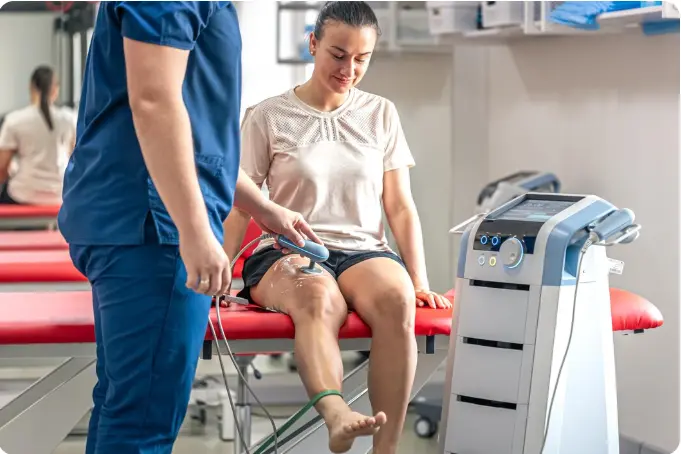
Best Robotic Knee Replacement Surgeon in Borivali
Robotic-assisted technology has become an option in modern knee replacement surgery, supporting detailed planning and implant positioning. Dr. Rahul Modi provides robotic-assisted knee replacement procedures at Arihant Superspeciality Hospital in Borivali West, based on the individual patient's condition and surgical requirements.
Robot-Assisted Knee Replacement Procedure and Its Working
Before performing the operation, detailed imaging, including CT scans when appropriate, may be obtained to create a three-dimensional model of the patient's knee anatomy. Dr. Modi can use this information to plan the positioning and alignment of the implant and assess the appropriate implant size before the procedure.
During the surgical procedure, the robotic system provides information that can assist the surgeon with bone preparation and implant positioning. This technology is designed to support surgical planning and precision, while the surgeon remains responsible for controlling and performing the procedure.
Dr. Modi maintains control throughout the operation. The robotic system functions as a surgical assistance tool rather than operating independently, with the procedure guided by the surgical plan and the patient's individual anatomy.
Importance of Accuracy in Knee Replacement
Appropriate implant alignment and positioning are important considerations in knee replacement surgery. Alignment can influence joint mechanics, movement, and the way the implant interacts with surrounding structures. Robotic-assisted technology can provide additional planning and measurement information during selected knee replacement procedures.
For patients considering robotic knee replacement surgery in Borivali, Dr. Modi evaluates the patient's anatomy, degree of joint damage, deformity, previous surgeries, and other clinical factors before discussing whether robotic assistance is appropriate.
Is Robotic Surgery Suitable for You?
Robotic-assisted surgery is not necessary for every patient. During consultation, Dr. Modi evaluates the patient's condition and discusses the available surgical options. Robotic assistance may be considered in selected cases involving complex deformities, unusual anatomy, or certain revision procedures.
For other patients, conventional knee replacement techniques may be an appropriate option. The decision to use robotic assistance depends on the individual clinical situation and should not be based solely on the availability of newer technology.
Dr. Rahul Modi's Expertise in Robotic Technologies
Dr. Modi holds an MBBS degree and an MS in Orthopaedics with gold medal distinction, along with DNB and MNAMS qualifications. He has also completed fellowship training in Sports Medicine, Arthroscopy, and Shoulder Surgery at Hospital Quirónsalud, Barcelona, Spain.
His experience includes knee replacement procedures performed using both conventional and robotic-assisted techniques. This experience allows him to discuss the potential role of robotic assistance and help patients understand the differences between available surgical approaches.
Patients seeking an experienced robotic knee replacement surgeon in Borivali can consult Dr. Rahul Modi at Arihant Superspeciality Hospital in Borivali West.
Rehabilitation Following Robotic Knee Replacement
Recovery following knee replacement varies from patient to patient and depends on factors such as age, overall health, pre-operative mobility, surgical technique, and rehabilitation progress. Robotic assistance may help with surgical planning and precision, but the recovery process still depends on the individual's condition and postoperative rehabilitation.
Many patients are encouraged to begin appropriate movement and physiotherapy soon after knee replacement, with walking introduced according to their medical condition and the treating team's recommendations. A structured rehabilitation program can help improve knee movement, strength, balance, and functional mobility.
An Open, Patient-Centric Approach in Borivali
Dr. Modi focuses on clear communication when discussing knee replacement options with patients. He explains whether robotic-assisted surgery may be suitable or whether a conventional surgical approach may be more appropriate based on the patient's clinical requirements.
For patients seeking robotic joint replacement in Borivali, Dr. Modi combines orthopaedic experience with technology-assisted surgical planning and individualized care.
Schedule Your Consultation Today
If you're considering knee replacement and want to understand whether robotic-assisted surgery is suitable for your condition, consult Dr. Rahul Modi for a detailed clinical evaluation. The appropriate surgical approach can be discussed based on your knee condition, anatomy, medical history, and functional requirements.
Visit drrahulmodiortho.com to learn more and book an appointment with Dr. Rahul Modi for consultation regarding robotic knee replacement surgery in Borivali.
FAQs
1. What should you look for in a robotic knee replacement surgeon in Borivali?
When evaluating a robotic knee replacement surgeon in Borivali, experience with both robotic and traditional techniques matters most — which is exactly what sets Dr. Rahul Modi apart. Having performed hundreds of knee replacements using both methods, he knows precisely when robotic assistance adds real value versus when conventional surgery works just as well.
2. Does the robot perform the surgery, or does Dr. Modi still do the operating?
Dr. Modi remains fully in control throughout the procedure — the robotic system works as a guidance tool, not a replacement for the surgeon. It helps execute the pre-planned surgical approach with greater accuracy, but every decision and movement is still directed by Dr. Modi.
3. Who actually needs robotic-assisted knee replacement, and who doesn't?
Robotic assistance isn't necessary for every patient. It tends to offer the most benefit for complicated cases — significant bone deformities, severe bone loss, or revision surgery after a previous implant. For straightforward cases, traditional surgical methods often deliver equally good results.
4. Can robotic knee replacement be used for revision surgery after a previous implant failed?
Yes, and it's actually one of the situations where robotic guidance tends to help the most. Revision cases often involve altered bone structure from the original surgery, and the added precision of robotic planning can help account for that complexity more reliably than manual techniques.
5. How does implant misalignment affect a knee replacement in the long run?
Even small deviations in implant positioning can lead to uneven wear over time, an altered walking pattern, or a knee that simply doesn't feel natural. This is part of why alignment accuracy matters so much — it affects not just early recovery, but how the implant performs years down the line.
6. How soon can I walk after robotic knee replacement surgery?
Many patients are able to start walking within the first day after surgery, supported by Dr. Modi's physiotherapy protocol. Because robotic-assisted surgery tends to cause less disruption to surrounding tissue, discomfort is often lower and mobility returns a bit faster compared to traditional open surgery.
7. Is robotic knee replacement recovery genuinely faster than traditional surgery?
Many patients do report feeling better sooner compared to open knee surgery, largely because the robotic approach is less disruptive to the tissue around the joint. That said, actual recovery speed still depends on the patient's age, overall health, and how closely they follow their rehabilitation plan.