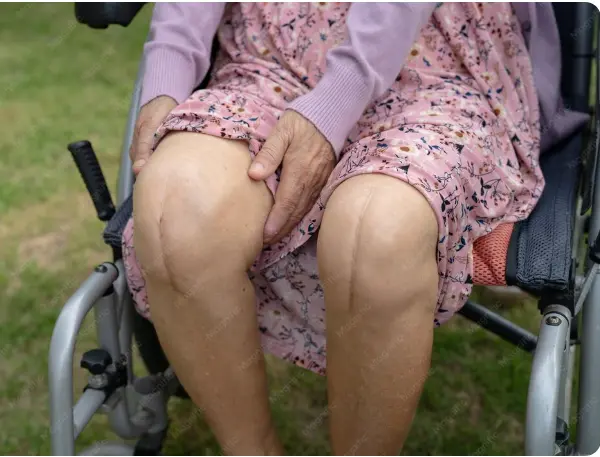
Best Total Knee Replacement Surgeon in Goregaon
If chronic knee pain is beginning to hinder your daily activities such as walking, climbing stairs, or even sitting comfortably, then it might be a good idea to start thinking about having total knee replacement surgery. Dr. Rahul Modi is one of the top total knee replacement surgeons in Goregaon, providing orthopedic services at Kapadia Multispeciality Hospital to patients across Goregaon and the western suburbs of Mumbai.
What is Total Knee Replacement Surgery?
Total knee replacement is a procedure that involves removing damaged cartilage and bone from the knee joint and replacing the affected surfaces with an artificial implant. The surgery is performed to improve joint function and address pain associated with conditions such as advanced arthritis or joint degeneration. Unlike partial knee replacement, which addresses a specific compartment of the knee, total knee replacement involves the affected surfaces of the knee joint.
The Meaning of the Recovery Process
Recovery following total knee replacement varies from patient to patient. Rehabilitation generally begins soon after surgery with appropriate movements and exercises, which can support mobility and circulation. During the initial stage, patients may require rest, assistance with walking, and guidance from the medical and physiotherapy team.
As recovery progresses, patients gradually work toward improving knee movement, strength, balance, and independence in daily activities. The timeline for returning to driving, work, exercise, and other activities depends on individual healing, physical condition, rehabilitation progress, and medical advice.
Why Choose Dr. Rahul Modi for Knee Replacement Surgery in Goregaon?
Dr. Modi holds qualifications including an MBBS and MS in Orthopaedics, along with DNB and MNAMS qualifications. He has also completed additional training through a fellowship in Sports Medicine, Arthroscopy and Shoulder Surgery at Hospital Quirónsalud in Barcelona, Spain.
Dr. Modi has experience in knee replacement procedures and emphasizes the importance of rehabilitation following surgery. Physiotherapy and follow-up care are planned according to the patient's condition and recovery requirements. This approach supports individualized care throughout the treatment process.
Robotic-Assisted Total Knee Replacement
Patients who are suitable candidates may also be considered for robotic-assisted total knee replacement. This approach can use preoperative imaging and computer-assisted technology to support surgical planning and implant positioning. The suitability of robotic-assisted surgery depends on factors such as the patient's anatomy, joint condition, medical history, and surgical requirements.
Robotic assistance is not required for every patient, and the appropriate surgical technique is determined following an individual clinical assessment.
Patient Experiences in Goregaon
Patients may value clear communication and detailed information about the treatment and rehabilitation process. Dr. Modi discusses the surgical procedure, recovery expectations, and follow-up requirements with patients as part of their orthopedic care.
Arrange Your Consultation Now
If persistent knee discomfort is affecting your daily activities, consult Dr. Rahul Modi, a trusted knee replacement specialist in Goregaon, for an evaluation and discussion of suitable treatment options.
Visit drrahulmodiortho.com to make an appointment and learn more about knee replacement care.
FAQs
1. What makes Dr. Rahul Modi the best total knee replacement surgeon in Goregaon?
Dr. Modi combines strong academic credentials — including a gold medal in Orthopaedics and fellowship training from Barcelona — with a strong focus on post-surgical rehabilitation, offering personalized physiotherapy guidance during the critical first six weeks of recovery at Kapadia Multispeciality Hospital.
2. How is total knee replacement different from partial knee replacement?
Total knee replacement addresses the entire knee joint, removing worn cartilage and bone across the whole surface, while partial replacement only corrects the damaged section and leaves healthy parts of the joint intact. Total replacement is generally recommended for more widespread arthritis or joint degeneration.
3. Week by week, what does recovery from total knee replacement actually look like?
Recovery starts almost immediately, with gentle movement encouraged soon after surgery to prevent blood clots. By the third week, pain typically eases and daily activities become more manageable. Weeks four to six often bring light activity and sometimes driving, while weeks seven to eleven continue with structured rehabilitation. Most patients return to work and normal routines around the three-month mark.
4. When can I start driving again after total knee replacement surgery?
Many patients are able to resume driving somewhere between weeks four and six, once mobility and reflexes have sufficiently recovered. The exact timing depends on individual healing progress, so Dr. Modi assesses each patient before giving the go-ahead.
5. Is robotic-assisted total knee replacement suitable for every patient?
Not automatically. Dr. Modi evaluates each patient's anatomy and extent of joint damage before recommending robotic-assisted surgery, rather than offering it as a default option. When appropriate, it allows for more precise implant alignment and less disruption to surrounding soft tissue compared to traditional methods.
6. Why does physiotherapy matter so much in the weeks right after surgery?
The first six weeks of physiotherapy often shape how well the rest of recovery goes — building strength, restoring range of motion, and preventing stiffness from setting in. Dr. Modi provides personalized rehab instructions during this window, which he considers a key factor separating an average recovery from a great one.
7. How soon can I get back to work after total knee replacement surgery?
Most patients are able to return to work around the three-month mark, though this varies depending on the physical demands of the job. Dr. Modi generally advises continuing to avoid physically strenuous activity even after returning to a normal routine.